
Google’s December 2025 Core Update is now fully rolled out and many sites are seeing noticeable ranking shifts. This guide explains what changed, who is most affected, and how to update your SEO strategy for sustainable growth instead of quick fixes.
Timeline and scope of the December 2025 core update
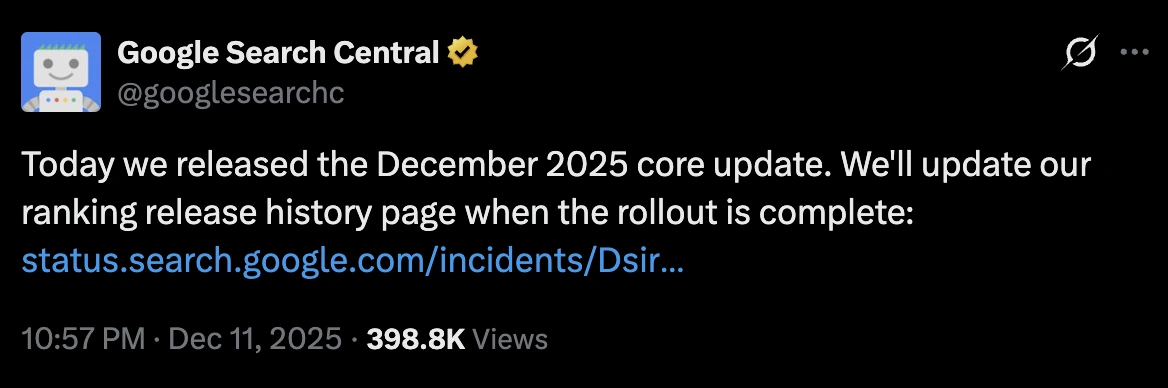
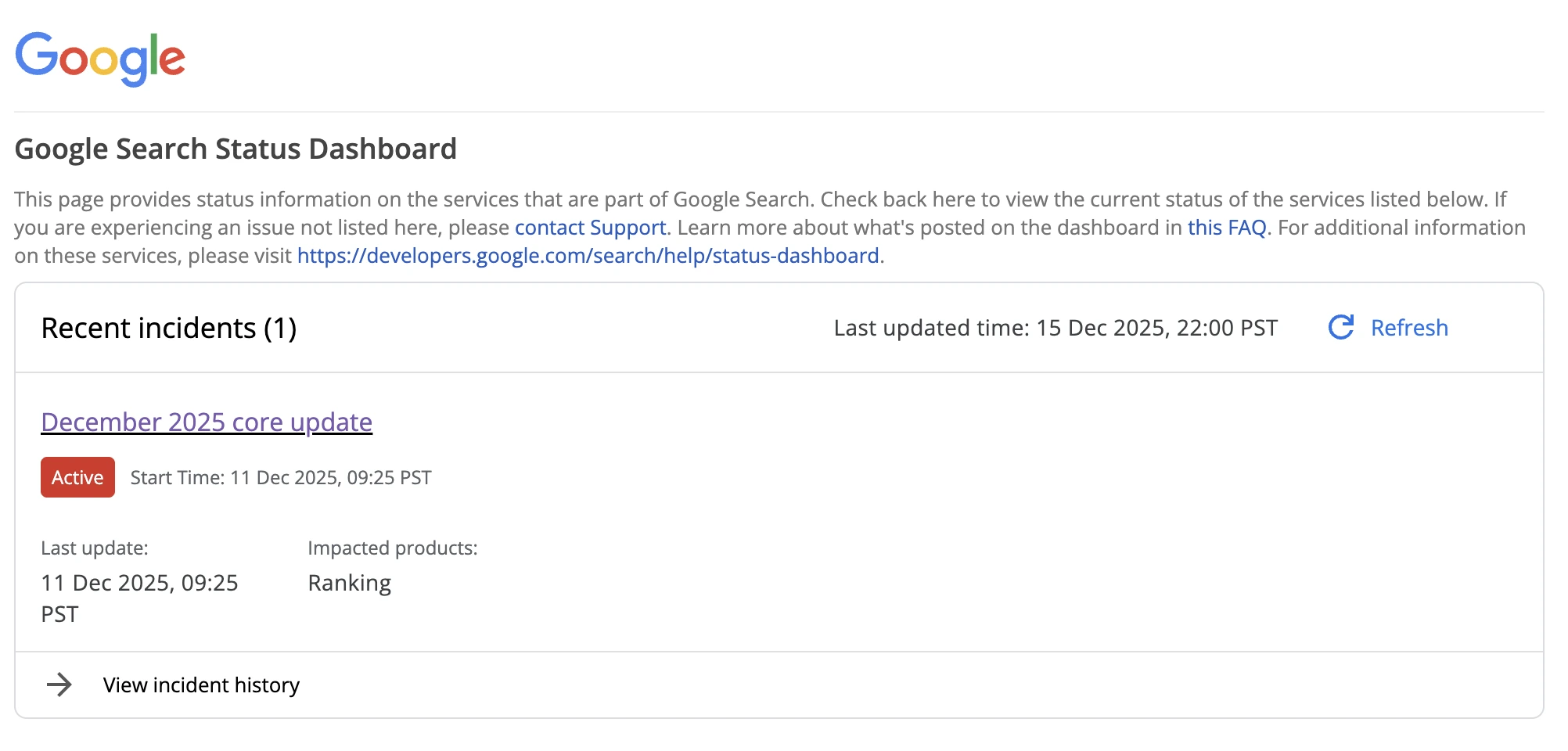
Google began rolling out the December 2025 core update on December 11, 2025, at 9:25 a.m. PST via the official Search Status Dashboard. The rollout completed on December 29, taking about 18 days and affecting rankings globally across all languages and site types. Google lists this as a ranking incident, not a crawling or indexing problem, so its main effect is how pages are ordered in search results.
What Google core updates do
Core updates are broad improvements to Google’s main ranking systems that run several times a year. Instead of targeting specific sites, they re-evaluate many factors at once to better match search results with what users find relevant, helpful, and trustworthy. During these rollouts, some sites inevitably gain visibility while others lose, even if they have not broken any guidelines.
Key changes in the December 2025 update
This core update follows earlier 2025 updates in March and June, as well as the August 2025 spam update, but its focus is quality, intent, and user satisfaction rather than pure spam. Several shifts align with your new mind map and with how Google describes core updates today.
Here is what stands out:
- Higher quality threshold: Pages that were “okay” are now struggling if they lack depth, unique insights, or clear value for the searcher.
- Intent over keywords: Exact-match keywords matter less than accurately answering the user’s real goal behind the query.
- Helpful Content System integration: Google has moved its helpful content evaluation into the core ranking systems, so helpfulness is now part of the default scoring, not a side system.
- Stronger focus on AI content quality: This update scrutinizes low-value AI-generated content more aggressively and rewards pages where AI is combined with human expertise and originality.
E-E-A-T reinforcement: experience, expertise, and trust
Recent updates show that Google is relying more on E-E-A-T signals (Experience, Expertise, Authoritativeness, Trustworthiness) across most competitive topics, not just YMYL niches. The December 2025 core update continues this trend and amplifies the gap between real experts and generic content.
Practical ways to show strong E-E-A-T:
- Experience: Add real-world examples, screenshots, case studies, and “here’s what happened when I tested this” style insights.
- Expertise: Use descriptive author bios, link to credentials, and keep content tightly aligned with your niche.
- Authoritativeness: Build focused topic clusters, earn mentions from relevant sites, and keep your information updated.
- Trustworthiness: Be transparent about monetization, show clear contact information, and fix thin or misleading content across the site.
Content quality standards after this update
Depth clearly beats raw word count in this update. Thin posts padded to hit a word target are losing to concise but deeply useful pages that help users complete a task or make a decision.
Use these content standards to guide your updates:
- Depth and specificity: Cover subtopics, FAQs, and edge cases while staying tightly on intent; avoid repeating the same points with different wording.
- Original value: Add your own data, frameworks, checklists, and personal commentary instead of rephrasing what is already ranking.
- Clear structure: Lead with a direct answer, then expand into sections that are easy to scan on mobile with short paragraphs and descriptive headings.
- Human-refined AI content: If you use AI, treat it as a draft; layer in your experiences, examples, and local context before publishing.
User satisfaction signals and behavior
Google does not confirm specific behavioral metrics as ranking factors, but pages that align with user intent usually show better engagement. The December 2025 update seems to favor sites where users stay longer, click deeper, and quickly find what they need.
Pay attention to:
- Time on page and scroll depth: Make intros clear, answer the main query early, and then invite deeper reading with subheadings, FAQs, and visuals.
- Task completion: Make it easy for users to complete the job they came for, whether that is learning a process, choosing a product, or troubleshooting an issue.
- Reduced pogo-sticking: If users bounce back to Google quickly, improve the page title, meta description, and opening section so expectations match the content.
- Mobile responsiveness and loading speed
Sectors most affected by the December 2025 update
Early analyses from SEO tools and industry studies show that impact varies by niche and content model. The biggest swings tend to show up in sectors where generic or AI-heavy content had taken over.
Common losers:
- Thin affiliate and review sites relying on shallow summaries and aggressive monetization.
- Low-value ecommerce category pages with duplicated manufacturer descriptions and no unique guidance.
- Content farms and heavily automated publishing operations that flood the web with near-duplicate articles.
Common winners:
- Niche authority sites with strong topical focus and deep, experience-led content.
- Brands and creators who combine helpful articles with active communities, videos, or tools that keep users engaged.
How to check if your site was hit
Because this update is now complete, you can safely move from “wait and see” to diagnosis and action. The goal is not to react to daily fluctuations but to understand sustained changes since mid-December. Use this simple process:
- Mark the update window: Note that the update ran from December 11, 2025, 9:25 a.m. PST to December 29, 2025, 11:00 a.m. PST. In your analytics and Google Search Console, separate data from before and after this window.
- Compare key metrics in Google Search Console. Compare clicks, impressions, and average position for:
- Top pages (Landing pages report)
- Top queries (Queries report)
- Search appearance types (web, images, video, news if relevant)
- Rule out technical issues: Confirm there were no crawling, indexing, or manual action problems during the same period. Use URL inspection, coverage reports, and manual actions in Search Console to check.
Recovery strategies aligned with the new update
Google stresses that recovery from a core update is about improving overall quality, not finding a single fix. In practice, most meaningful recoveries happen over several months as Google re-evaluates your pages during ongoing crawls and smaller updates.
Track progress at status.search.google.com and read full guidance at developers.google.com.
Use this recovery playbook:
- Audit and prioritize: Group affected pages by topic and intent, then prioritize those with business value or strong backlink profiles for upgrades rather than quick deletions.
- Improve or merge weak content: For overlapping or thin articles, merge them into a single comprehensive resource that better serves the user than any individual page did.
- Strengthen E-E-A-T signals: Improve author bios, add case studies, embed relevant videos or tools, and reference credible sources where it genuinely helps the reader.
- Fix UX and technical friction: Improve Core Web Vitals, mobile usability, internal linking, and navigation so users can quickly discover related content.
- Give changes time: Monitor performance for at least 3 to 6 months, noting that Google now acknowledges ongoing smaller core updates that can reward improvements before the next big announcement.